
Security of Payment Act Guide for Australian Trade Subcontractors: When to Use It, When Not to Use It, and How to Recover Payment from Builders
About the Author: Ashley Thomson

As a business coach working with established trade and construction businesses across Australia, I spend a lot of time helping owners build stronger commercial systems. One area that consistently benefits from clearer processes and better team capability is payment management. When your team understands how to use the Security of Payment Act properly, it becomes a normal part of running a disciplined, profitable operation.
This guide is written to help you and your team use the Act with confidence. The focus is on giving your business a clear, structured pathway to recover payment for completed work and supporting your people to operate with commercial clarity. When your project managers, estimators, and leading hands understand how the Act works, they make better decisions, protect your margins, and keep cash flow steady.
Why the Security of Payment Act Matters for Subcontractors
The Security of Payment Act exists to ensure subcontractors in construction, electrical, plumbing, HVAC, concrete, landscaping, solar, fabrication, and commercial maintenance can recover payment for work completed. It provides a clear process to follow when a payment is delayed or disputed.
In my work with established trade businesses, I see the Act used most effectively when it’s treated as a standard commercial tool. When your internal systems are strong, the Act becomes straightforward. When your systems are inconsistent, the process becomes harder and more stressful for your team.
The goal is to build capability so your people know how to use the Act confidently and consistently.
When to Use the Security of Payment Act
There are situations where using the Act is the right commercial step. These moments usually become clear when your internal processes are working well, and your team has followed the right steps.
One common situation is when a payment deadline has passed, and your team has already followed your normal follow‑up process. If your accounts person has sent reminders, your project manager has checked in with the builder, and communication has stalled, the Act provides a structured next step.
Another situation is when a variation has been completed, and the builder is disputing the value or the instruction. This often happens in electrical, plumbing, HVAC, fabrication, and commercial maintenance work, where the scope changes quickly. If your team has documented the instruction and the work is complete, the Act supports you in recovering the value of that work.
A third situation is when a builder is consistently late with payments, and your team needs a clear framework to keep cash flow predictable. In these cases, the Act gives your business a reliable process to follow.
When Not to Use the Security of Payment Act
There are also times when using the Act isn’t the best option.
If you have a strong, long‑term relationship with a builder who generally pays on time, it’s worth resolving the issue through direct communication first. A Payment Claim under the Act is a formal step, and your team should understand when it’s appropriate to make one and when it’s better to keep the conversation open.
If your documentation is incomplete or your variation approvals are unclear, your position may not be strong enough for a formal claim. In these cases, I coach owners to focus on strengthening their internal systems before escalating.
If the dispute is genuinely unclear or your team contributed to the delay, the Act may not deliver the outcome you want. A constructive conversation backed by better processes is usually more effective.
How to Recover Payment from Builders Using the Act
Recovering payment through the Act is a structured process. When your team understands each step, the process becomes predictable and manageable.
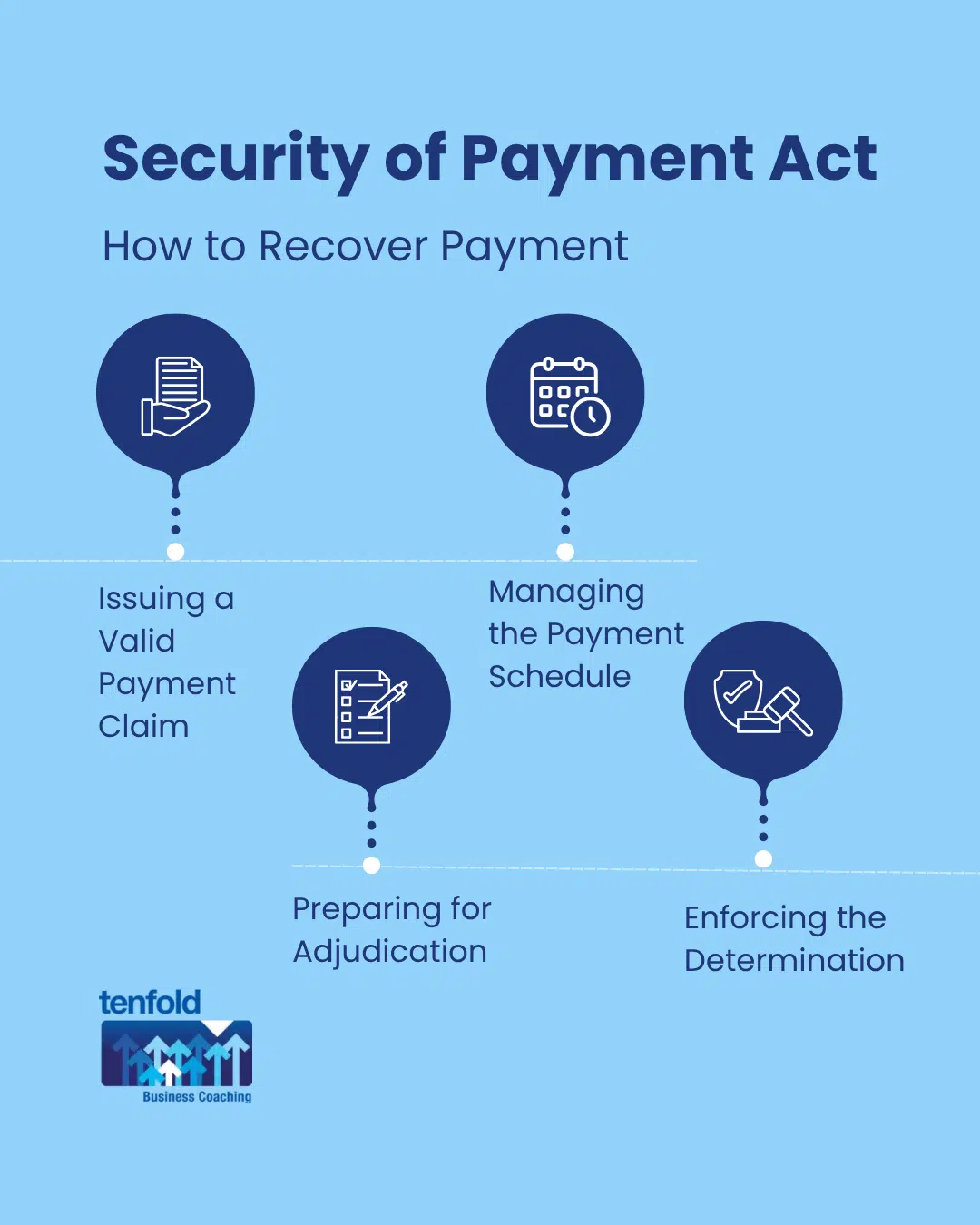
Issuing a Valid Payment Claim
The first step is to prepare and issue a valid Payment Claim. It must reference the Act, include the claimed amount, and clearly describe the work completed. Many subcontractors lose time because their claims are vague or inconsistent. Training your team to prepare clear, accurate claims sets the foundation for every step that follows.
Managing the Payment Schedule
The second step is managing the Payment Schedule. The builder must respond within the required timeframe. If they don’t respond or if they schedule a lower amount, your team has a defined pathway to escalate. When your internal systems are strong, this stage becomes straightforward, and your team can move through it with confidence.
Preparing for Adjudication
The third step is adjudication. This is where strong documentation makes a meaningful difference. Daily site records, photos, variation approvals, delivery dockets, and progress reports all support your claim. When I coach project managers and estimators, I focus heavily on building these habits so adjudication becomes a clear, organised process rather than a last‑minute scramble.
Enforcing the Determination
The final step is enforcing the determination. Once adjudication is complete, the determination is legally enforceable. Most builders pay at this point because the process is structured and the outcome is clear. When your team understands how to navigate this final stage, payment recovery becomes predictable and commercially steady.
Building Stronger Internal Systems to Support Payment Recovery
The subcontractors who rarely need to escalate payment issues are the ones with strong internal systems. They have clear processes for variations, daily site reporting, progress claims, and communication with builders. Their project managers know how to document instructions, confirm scope changes, and protect margins.
When your team is trained properly, the Act becomes a safety net rather than a primary tool. Strong commercial discipline keeps cash flow predictable and prevents disputes from escalating.
Training Your Team to Use the Act Confidently
Owners often come to me because they’re tired of being the only person in the business who understands contracts, variations, and payment processes. They want their team to step up so the business isn’t dependent on them for every commercial decision.
Your team needs to understand how to protect the business commercially, not just how to run a job. That includes knowing when to escalate a payment issue, how to prepare a strong Payment Claim, and how to communicate with builders in a way that maintains professionalism while protecting your position.
When your team has that capability, you reduce risk, improve cash flow, and strengthen your relationships with builders. You also free yourself from the constant pressure of chasing payments and resolving disputes.
The Commercial Benefits of Using the Act Properly
When subcontractors use the Act correctly, the impact on cash flow is immediate. Payroll becomes easier to manage. Supplier accounts stay current. You can take on more work without stretching your finances.
When the Act is applied inconsistently or reactively, claims are delayed, and disputes drag on. Your team becomes reactive instead of proactive.
Treating the Act as part of your commercial toolkit helps protect your business and maintain steady operations.
Preparing Your Business for Better Payment Outcomes
If you want to improve your payment outcomes, start by strengthening your internal systems. Review your variation process. Tighten your site reporting. Train your project managers to document instructions properly. Build a consistent approach to progress claims.
Once those foundations are in place, the Act becomes far easier to use. You’ll have the documentation you need. You’ll have the confidence to escalate when required. And you’ll have a team that understands how to protect the business commercially.
Next Steps for Owners Considering Coaching
If you’re investing in coaching for your team, this is one of the most valuable areas to focus on. Strong commercial capability protects your margins, improves cash flow, and reduces the stress of running a trade business.
At Tenfold, we coach your team to operate with the discipline and structure that established businesses need. If you want your project managers, estimators, or leading hands to step up commercially, this is the right time to start.
Frequently Asked Questions
What’s the risk of delaying action under the Security of Payment Act?
Delays reduce your commercial leverage and make it harder for your team to recover payment efficiently.
How do I know when my team is ready to escalate a payment issue?
If your internal process has been followed, communication has stalled, and your documentation is clear, your team is ready to escalate.
What investment is involved in using the Act?
Most of the investment is in preparation. When your systems are strong, adjudication costs are usually outweighed by the value of the recovered payment.
What internal systems support a strong Payment Claim?
Clear variation approvals, daily site records, progress tracking, and consistent communication logs give your team the foundation they need.
How does Tenfold Business Coaching help subcontractors with payment recovery?
We train your team to manage claims, variations, and documentation with commercial discipline so you recover payments faster and reduce disputes.


