
PPSR for Trade Subcontractors: How to Protect Materials and Goods Supplied to Builders on Credit
About the Author: Ashley Thomson

As a business coach working with established trade and construction businesses across Australia, I spend a lot of time helping owners strengthen their commercial systems. One area that often gets overlooked is how to protect materials and goods supplied to builders on credit. Many subcontractors assume that once materials are delivered to the site, they’re safe. In reality, without the right protections in place, you can lose ownership of those materials long before you’ve been paid for them.
That’s where the PPSR comes in. When your team understands how to use the Personal Property Securities Register properly, it becomes a powerful tool for protecting your business. This guide is designed to help you and your team use the PPSR with confidence so you can safeguard the materials you supply, reduce financial risk, and keep your cash flow steady.
Why the PPSR Matters for Trade Subcontractors
The PPSR (Personal Property Securities Register) is a national register that allows businesses to record a security interest over goods supplied on credit. For subcontractors in electrical, plumbing, HVAC, fabrication, landscaping, solar, concrete, and commercial maintenance, it’s one of the most effective ways to protect materials delivered to the site before payment is received.
In my business coaching work with tradies, I see the same pattern. Subcontractors supply materials to a builder, the builder delays payment, and the subcontractor assumes they can reclaim the goods if needed. But under Australian law, ownership often transfers once the materials are installed or incorporated into the project. Without a registered security interest, you may have no legal right to recover them.
The PPSR gives you a clear, structured way to protect your position. When your internal systems are strong and your team understands how to register security interests correctly, you reduce risk and strengthen your commercial footing.
When Subcontractors Should Use the PPSR
There are several situations where registering on the PPSR is a smart commercial move.
One common situation is when you supply high‑value materials to a builder on credit. Electrical switchboards, HVAC units, plumbing fixtures, fabricated steel, solar components, and custom‑made items all carry a high cost. If the builder becomes insolvent or delays payment, the PPSR gives you priority over unsecured creditors.
Another situation is when you’re working with a builder for the first time. Even if the relationship starts well, you don’t yet have a track record of payment behaviour. Registering your interest protects your business while the relationship develops.
A third situation is when you’re supplying materials that are delivered to the site well before installation. In these cases, the materials may sit unsecured for weeks. If the builder’s financial position changes suddenly, the PPSR ensures your interest is recognised.
When the PPSR May Not Be Necessary
There are also times when registering on the PPSR may not be required.
If you’re working with a long‑term builder who consistently pays on time and your supply terms are simple, you may decide that the administrative effort isn’t needed for low‑value items.
If you’re supplying labour only, or the materials are purchased directly by the builder, the PPSR doesn’t apply.
If the goods are paid for in full before delivery, there’s no credit component, so a security interest isn’t required.
The key is to make deliberate decisions rather than leaving your business exposed by default.
How the PPSR Protects Your Materials
The PPSR protects your materials by giving you a legally recognised security interest. This means that if a builder becomes insolvent, enters administration, or fails to pay, you have priority over unsecured creditors. In many cases, you can reclaim the goods or recover their value ahead of others.
For subcontractors in trades and fabrication, this protection is significant. Materials often represent a large portion of job costs. Without PPSR protection, you may lose both the materials and the payment.
When your team understands how to register correctly, the PPSR becomes a normal part of your commercial process, just like issuing a purchase order or confirming a variation.
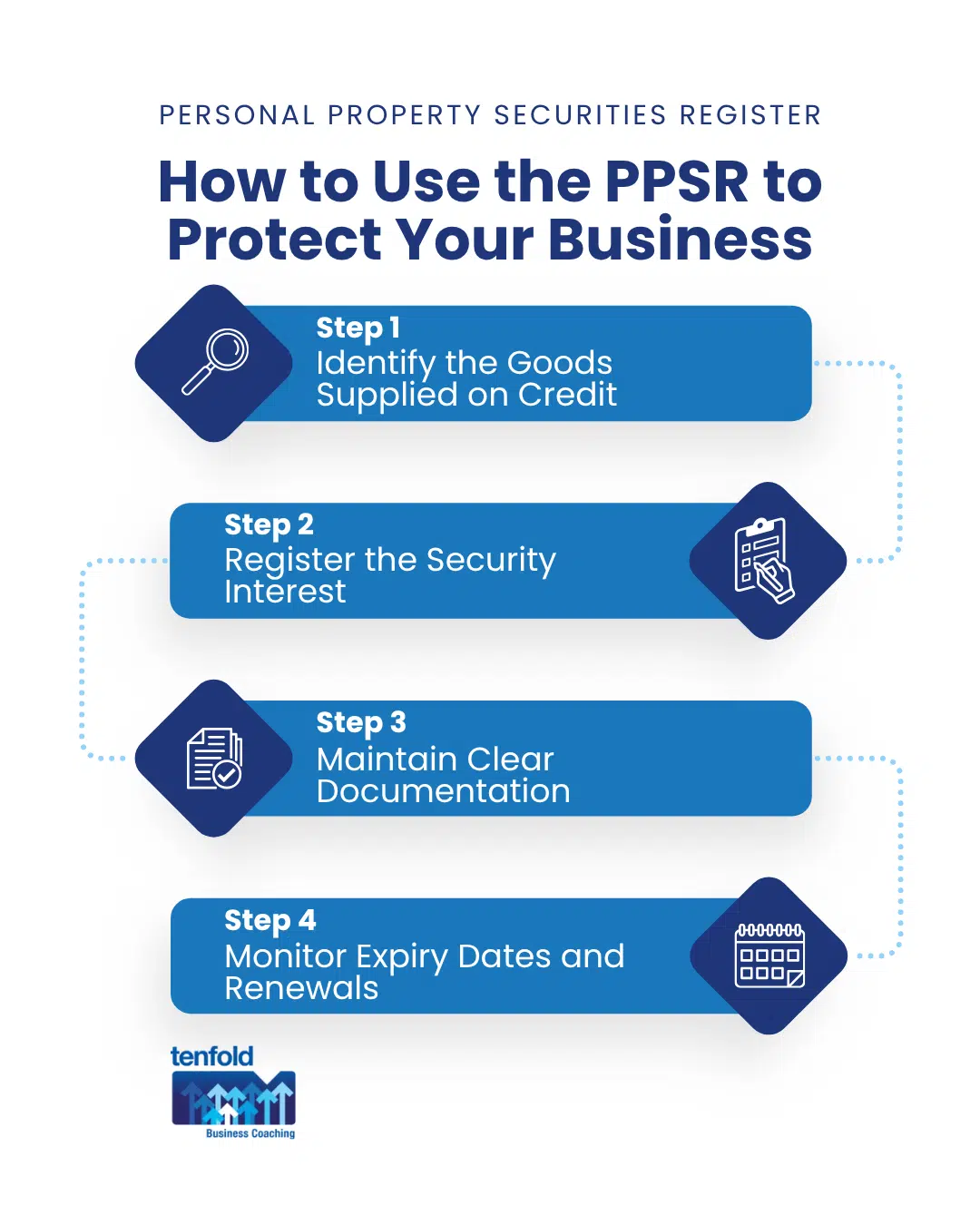
How to Use the PPSR to Protect Your Business
Using the PPSR effectively comes down to having clear internal systems and a consistent process. When your team knows what to register, when to register it, and how to maintain accurate records, the process becomes straightforward.
Step 1: Identify the Goods Supplied on Credit
The first step is to identify which materials or goods are being supplied before payment. This includes items delivered to the site, stored offsite for the project, or fabricated specifically for the job. Your team needs to understand which items carry the most risk and should be prioritised for registration.
Step 2: Register the Security Interest
The second step is to register your security interest on the PPSR. The registration must be accurate, timely, and linked to the correct entity. Errors in registration can make the security interest invalid. Training your team to complete this step properly is essential for protecting your position.
Step 3: Maintain Clear Documentation
The third step is maintaining clear documentation. Purchase orders, delivery dockets, invoices, and supply terms all support your registration. When I coach project managers and estimators, I focus on building habits that keep documentation consistent and accessible. This ensures your PPSR registration is backed by strong evidence if it’s ever challenged.
Step 4: Monitor Expiry Dates and Renewals
The final step is monitoring expiry dates and renewals. PPSR registrations don’t last forever. Your team needs a system to track renewal dates so that your security interest remains active throughout the project. When this process is built into your internal systems, it becomes routine and reliable.
Strengthening Your Internal Systems Around PPSR
The subcontractors who use the PPSR most effectively are the ones with strong internal systems. They have clear processes for identifying credit‑supplied goods, registering security interests, maintaining documentation, and tracking renewals. Their teams understand the commercial importance of protecting materials and consistently follow the process.
When your systems are strong, the PPSR becomes a natural part of your workflow. It supports your cash flow, reduces risk, and gives you confidence when supplying materials to builders.
Building Capability in Your Team
Owners often come to me because they want their team to take on more commercial responsibility. They don’t want to be the only person who understands contracts, supply terms, or credit risk. They want project managers, estimators, and leading hands to operate with commercial awareness.
Understanding the PPSR is part of that capability. When your team knows how to protect materials supplied on credit, they make better decisions and reduce the business’s financial exposure. They also communicate more confidently with builders and suppliers because they understand the commercial framework behind the work.
The Commercial Benefits of Using the PPSR Properly
When subcontractors use the PPSR correctly, the commercial benefits are clear. You reduce the risk of losing materials. You strengthen your position in the event of insolvency. You protect your cash flow. You also build a more resilient business because your team understands how to safeguard the value you deliver.
When the PPSR is ignored or used inconsistently, the opposite happens. Materials become exposed. Payment delays create more pressure. Your business carries unnecessary risk.
Treating the PPSR as part of your commercial toolkit helps you operate with confidence and clarity.
Preparing Your Business for Better Protection
If you want to improve how your business protects materials supplied on credit, start by reviewing your internal systems. Identify which materials carry the most risk. Clarify who is responsible for PPSR registrations. Train your team to maintain accurate documentation. Build a consistent process for renewals.
Once these foundations are in place, the PPSR becomes far easier to use. You’ll have the systems, the documentation, and the capability to protect your business effectively.
Next Steps for Owners Considering Coaching
If you’re investing in coaching for your team, this is an area that delivers strong commercial returns. When your people understand how to protect materials and manage credit risk, your business becomes more stable and more profitable.
At Tenfold, we coach your team to operate with the discipline and structure that established businesses need. If you want your project managers, estimators, or leading hands to step up commercially, this is the right time to start.
Frequently Asked Questions (FAQs)
What’s the risk of supplying materials on credit without PPSR protection?
You may lose ownership of the materials if the builder becomes insolvent or delays payment, and you may have no priority over other creditors.
When should subcontractors register on the PPSR?
Registration makes sense when supplying high‑value materials, working with new builders, or delivering goods to the site before payment.
What does it cost to use the PPSR?
The registration fee is low. The main investment is in having clear internal systems so registrations are accurate and timely.
What systems support effective PPSR use?
Clear supply terms, consistent documentation, accurate registrations, and a reliable renewal process all support strong PPSR protection.
How does Tenfold Business Coaching help subcontractors with PPSR processes?
We train your team to manage registrations, documentation, and commercial risk so your materials and cash flow are protected.


