
Subcontractor Contract Terms: Clauses That Protect Trade Businesses from Builder Payment Risk, Cost Increases and Disputes
About the Author: Ashley Thomson

As a business coach working with established trade and construction businesses across Australia, I spend a lot of time helping owners strengthen their commercial foundations. One of the most effective ways to protect your business is through well‑structured subcontractor contract terms. Strong clauses don’t just reduce risk. They give your team clarity, protect your margins, and create a more predictable operating environment.
This guide is written to help you and your team understand the contract terms that matter most. When your project managers, estimators, and leading hands know what to look for and how to apply these clauses, they make better decisions and protect the business commercially. Clear contract terms support steady cash flow, reduce disputes, and give you confidence when working with builders.
Why Contract Terms Matter for Subcontractors
Subcontractors in electrical, plumbing, HVAC, concrete, landscaping, solar, fabrication, and commercial maintenance often carry significant financial risk. You supply labour, materials, and time long before you receive payment. You manage variations, delays, and scope changes. You rely on builders to honour agreements and pay on time.
Strong contract terms help balance that risk. They give you a clear framework for payment, variations, delays, cost increases, and dispute resolution. When your internal systems are aligned with your contract terms, your team can operate with confidence and consistency.
In my business coaching work with tradies, I see the difference immediately. Businesses with strong contract terms have fewer disputes, better cash flow, and more predictable margins. Businesses with weak or unclear terms often find themselves absorbing costs, chasing payments, or dealing with preventable issues.
The Contract Clauses That Protect Subcontractors
There are several key clauses that protect trade businesses from payment risk, cost increases, and disputes. When these clauses are clear and consistently applied, your business becomes more resilient and commercially disciplined.
Payment Terms That Support Cash Flow
Payment terms are one of the most important parts of any subcontract. They determine when you get paid, how you get paid, and what happens if payment is delayed. Clear payment terms outline claim dates, approval timelines, payment schedules, and consequences for late payment. When your team understands these terms, they can follow a consistent process for issuing claims and following up. Strong payment terms also support your use of the Security of Payment Act because they align your internal processes with the Act’s requirements.
Variation Clauses That Protect Your Margins
Variations are a normal part of construction work. Scope changes happen in electrical, plumbing, HVAC, fabrication, and commercial maintenance jobs every day. A strong variation clause outlines how variations must be instructed, documented, priced, and approved. It also clarifies what happens when work needs to proceed urgently. When your team understands this clause, they can manage variations consistently and protect your margins.
Price Adjustment Clauses for Cost Increases
Material prices, labour rates, and supply costs can change quickly. Without a price adjustment clause, your business may be forced to absorb increases that occur after the contract is signed. A well‑structured price adjustment clause allows you to adjust pricing when material costs rise, supply conditions change, or market rates shift. This clause is especially important for long‑duration projects where costs may fluctuate over time.
Retention Clauses That Keep Your Cash Flow Steady
Retention is common in construction contracts, but it can create cash flow pressure if not managed properly. A clear retention clause outlines how much retention will be held, when it will be released, and what conditions apply. Your team needs to understand how to track retention, follow up on release dates, and ensure that defect liability periods are managed correctly. When retention is handled well, it becomes a predictable part of your cash flow.
Time Extension Clauses That Protect You from Delays
Delays happen on every project. Weather, access issues, design changes, and builder‑driven delays can all impact your schedule. A strong time extension clause outlines how delays are reported, assessed, and approved. It also clarifies what happens when delays impact your costs. When your team understands this clause, they can document delays properly and protect the business from liquidated damages or cost overruns.
Dispute Resolution Clauses That Keep Projects Moving
A clear dispute resolution clause outlines how disagreements will be handled, who will be involved, and what steps must be taken before escalation. When your team understands this clause, they can resolve issues early and keep projects moving. It also gives you a structured pathway if a dispute becomes more complex.
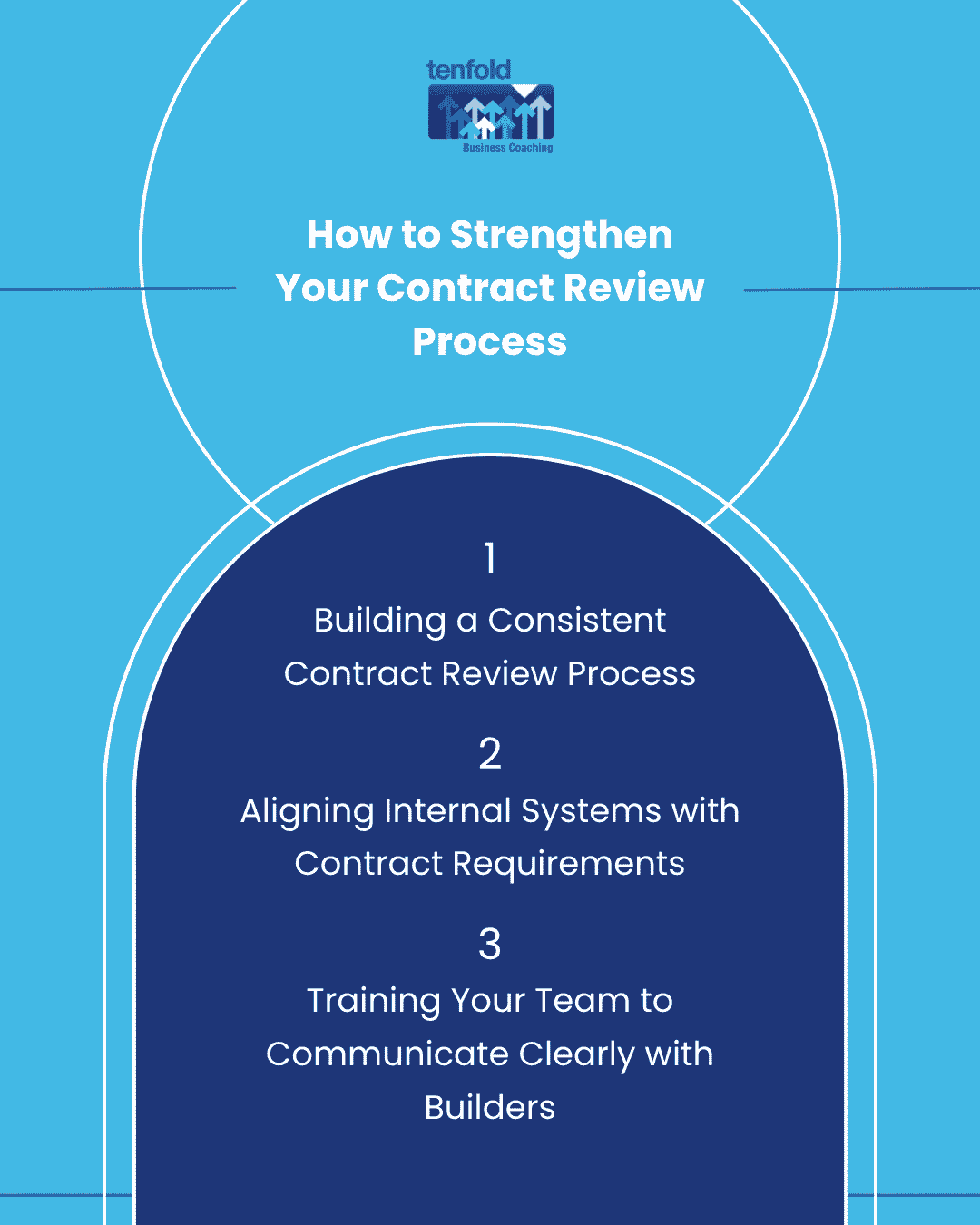
How to Strengthen Your Contract Review Process
Strong contract terms only protect your business when your team knows how to apply them. Many subcontractors rely on the owner to review every contract, creating bottlenecks and increasing risk. When your project managers and estimators understand the key clauses and know how to interpret them, they can identify issues early, ask better questions, and protect the business commercially. A structured contract review process gives your team clarity and ensures that every project starts on solid footing.
Building a Consistent Contract Review Process
The first step is building a consistent contract review process that your team can follow every time. This means creating a clear sequence for how contracts are reviewed, what information is checked, and how concerns are raised. Your team needs to know which clauses matter most, how to recognise red flags, and when to pause and seek clarification before signing. When this process is consistent, your business avoids rushed decisions and reduces the risk of agreeing to terms that expose you to payment delays, cost increases, or disputes. A reliable review process also helps your team develop commercial awareness because they’re working with the same structure on every project.
Aligning Internal Systems with Contract Requirements
The second step is aligning your internal systems with the contract terms you agree to. If your contract requires written approval for variations, your team needs a simple, repeatable way to document instructions. If the contract outlines specific claim dates, your accounts team needs a calendar or workflow that ensures claims are issued on time. If the contract includes retention release milestones, your project managers need a way to track those dates. When your internal systems match your contractual obligations, your team can follow the contract confidently and consistently. This alignment also reduces the risk of missed deadlines, incomplete documentation, or misunderstandings that can lead to disputes.
Training Your Team to Communicate Clearly with Builders
The third step is training your team to communicate clearly and professionally with builders. When your people understand the contract terms, they can have confident conversations about variations, delays, payment schedules, and scope requirements. Clear communication prevents small issues from becoming bigger problems and helps maintain strong working relationships. It also ensures that your team can represent the business commercially, not just operationally. When your project managers and estimators can speak to the contract with confidence, they protect your position and reduce the pressure on you as the owner to handle every commercial discussion.
Building Capability in Your Team Through Business Coaching
Owners often come to me because they want their team to take on more commercial responsibility. They don’t want to be the only person who understands contract terms, payment processes, or variation requirements. They want their project managers, estimators, and leading hands to operate with commercial awareness.
Business coaching services help your team build that capability. When your people understand contract terms, they make better decisions, protect your margins, and reduce risk. They also communicate more effectively with builders because they understand the commercial framework behind the work.
The Commercial Benefits of Strong Contract Terms
When subcontractors use strong contract terms consistently, the commercial benefits are clear. Payment becomes more predictable. Variations are managed properly. Cost increases are covered. Disputes are reduced. Your team operates with confidence and clarity.
When contract terms are weak or unclear, the opposite happens. Payment delays increase. Variations become messy. Margins shrink. Your team becomes reactive instead of proactive.
Treating contract terms as part of your commercial toolkit helps you build a stronger, more resilient business.
Preparing Your Business for Better Contract Outcomes
If you want to improve how your business manages contract terms, start by reviewing your current processes. Identify which clauses are missing or unclear. Train your team to understand the key terms. Align your internal systems with your contract requirements.
Once these foundations are in place, contract management becomes far easier. You’ll have the systems, capabilities, and confidence to protect your business effectively.
Next Steps for Owners Considering Coaching
If you’re investing in coaching for your team, this is an area that delivers strong commercial returns. When your people understand contract terms and know how to apply them, your business becomes more stable, more profitable, and easier to run.
At Tenfold, we coach your team to operate with the discipline and structure that established businesses need. If you want your project managers, estimators, or leading hands to step up commercially, this is the right time to start.
Frequently Asked Questions (FAQs)
What’s the risk of signing contracts without reviewing key clauses?
You may take on unnecessary financial risk, absorb cost increases, or face payment delays that could have been avoided.
When should subcontractors negotiate contract terms?
Negotiation should happen before signing, especially around payment terms, variations, price adjustments, and delays.
What investment is involved in improving contract management?
The main investment is in training and systems. Strong contract processes usually deliver significant financial returns.
What internal systems support better contract outcomes?
Clear documentation, consistent variation processes, accurate claim tracking, and structured communication all support strong contract management.
How does Tenfold Business Coaching help subcontractors with contract terms?
We train your team to understand key clauses, manage commercial risk, and apply contract terms consistently across projects.
If this is the problem you’re wrestling with, that’s literally what we coach on. Speak with Tania on 03 9813 8777 or book a strategy call.


