

We Bought the Business and Inherited the Team: How to Reset Standards in an SME Without Losing Good People
About the Author: Ashley Thomson

When owners come to me after buying a business, the same challenge comes up repeatedly. They have inherited a team that has operated a certain way for years, and now they need to improve performance without losing the people who keep the wheels turning. Improving team performance after acquisition is one of the most common coaching conversations I have with owners in trades, construction, and manufacturing. The opportunity is real, but so is the risk. Resetting standards in an SME is a delicate balance of commercial discipline, operational clarity, and people leadership.
I coach owners through this transition because the first twelve months after you buy a business set the tone for the next decade. If you get the reset right, you build a team that performs at a higher level than the previous owner ever achieved. If you get it wrong, you inherit old habits, old thinking, and old limitations. That is why many owners invest in management and leadership coaching for their operations, service, and project managers. They want their leaders to step up and drive the change with them.
The Reality of Inheriting a Team After Buying a Business
When you buy a business, you are not just acquiring assets, contracts, and equipment. You are acquiring a culture. In trades and manufacturing, that culture is often shaped by the previous owner’s personality rather than by systems or standards. I see this in electrical contracting firms, where the founder ran everything through their own relationships, and in fabrication shops, where the foreman has been calling the shots for twenty years. The team has learned to operate around the former owner’s preferences rather than best practices.
That means the moment you take over, you are dealing with inherited expectations. The team is watching to see what you will tolerate. They are testing whether the old shortcuts still apply. They are waiting to see if you will enforce the standards you talk about. This is where many new owners stumble. They assume they need to keep everything the same to avoid rocking the boat. In reality, the longer you wait to reset expectations, the harder it becomes.
Why Improving Team Performance After Acquisition Requires a Structured Reset
A structured reset is not about coming in heavy-handed. It is about establishing clarity. In every business I coach, the strongest teams are the ones that know exactly what good looks like. They know the standards for safety, quality, communication, quoting accuracy, job planning, and customer service. They know how decisions are made and who is accountable for what.
When owners skip this step, they end up with a hybrid culture. Some people follow the new expectations. Others cling to the old ways. Managers get stuck in the middle, trying to keep everyone happy. Productivity drops. Tension rises. The business becomes harder to run than it needs to be.
This is why owners often bring me in to work with their managers. Leadership coaching for your managers gives them the tools to communicate expectations, hold people accountable, and support the team through change. Without that capability, the reset relies entirely on the owner, which is not sustainable.
What I See in Trades, Construction, and Manufacturing Businesses During a Reset
In construction trades, the biggest issue is inconsistency. One team leader runs tight jobs with clean paperwork and accurate hours. Another runs jobs based on memory and habit. When you inherit that mix, you inherit the inconsistency that comes with it.
In fabrication and manufacturing, the challenge is usually workflow discipline. The previous owner may have tolerated rework, overtime blowouts, or informal scheduling. When you tighten those systems, some people feel exposed because the gaps become visible.
In commercial maintenance, the issue is often customer communication. Technicians may have been used to sending vague updates or none at all. When you introduce structured reporting, some push back because it feels like extra work.
These patterns are normal. They are not signs of a bad team. They are signs of a team that has never been coached to a higher standard.
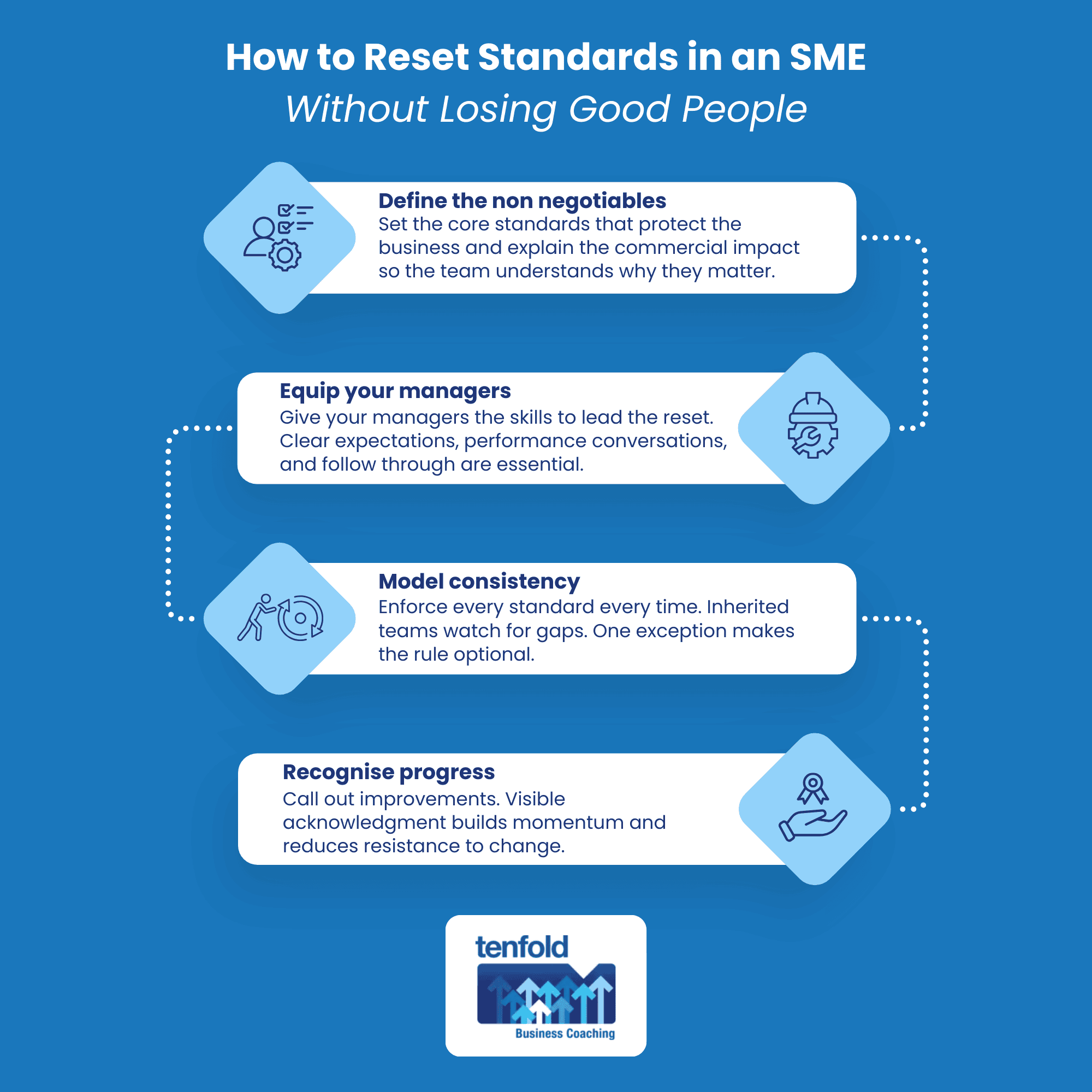
How to Reset Standards in an SME Without Losing Good People
The key is sequencing. You cannot change everything at once. You also cannot wait for the perfect moment. The reset needs to be staged, communicated, and reinforced.
Defining the Non-Negotiables
Start by defining the non-negotiables. These are the standards that protect the business commercially and operationally. In trades and manufacturing, this usually includes safety compliance, job documentation, quoting accuracy, and communication protocols. When I coach managers through this, we build a simple framework that they can use to explain the why behind each standard. People accept change more easily when they understand the commercial impact.
Equip Your Managers
Next, it’s important to equip your managers effectively, as this is where business coaching becomes essential. Your operations manager or service manager must develop the capability to lead the reset effectively. This includes the ability to conduct performance conversations, set clear expectations, and follow through consistently. Without this critical support, they tend to avoid conflict, allowing old habits to persist and undermine progress. Providing them with the necessary coaching and resources ensures they are prepared to lead change confidently and sustain improvements over the long term.
Model Consistency
Then, you need to model consistency carefully and thoroughly. If you assert that a certain standard matters, it’s vital to enforce it diligently every single time. Inherited teams are particularly attentive to inconsistencies and monitor deviations from established norms. If you let something slide even once, they may assume that the standard is optional or flexible. This subtle message can create confusion and weaken the organisation’s overall discipline. Consequently, many owners, often unintentionally, undermine their own reset or reform efforts by failing to maintain strict consistency and clarity in their standards.
Recognise Progress
Finally, it is essential to recognise and celebrate progress, as acknowledgment plays a crucial role in motivating individuals. When someone takes initiative or demonstrates effort, make sure to call it out and show appreciation. Similarly, when a team collaborates to improve a process or overcome a challenge, highlight their achievement openly. This consistent recognition not only boosts morale but also helps build momentum within the group. Over time, acknowledging progress reduces resistance to change and encourages a culture of continuous improvement and engagement.
The Role of Your Managers in Lifting Inherited Teams
Your managers are the leverage point. They are the ones who translate your expectations into daily behaviour. When I coach managers in trades and manufacturing businesses, I focus on three capabilities.
Communication
Managers need to clearly and consistently explain expectations, ensuring their team members understand what is required of them. They should communicate openly and provide regular reminders to reinforce these expectations. Additionally, managers need to possess the skill to reset old habits without creating defensiveness, approaching such changes with sensitivity and understanding to maintain a positive and productive work environment.
Accountability
Many inherited teams have never been held to a consistent standard of performance or accountability. Managers need to learn the importance of following through on commitments, clearly documenting expectations, and addressing issues promptly before they escalate.
Operational Discipline
This encompasses essential tasks such as planning, scheduling, job costing, and workflow management. When managers invest in enhancing these skills, it has a positive ripple effect, lifting the entire team and improving overall productivity and efficiency.
This is why owners invest in management and leadership coaching. They want their managers to drive the reset, not rely on the owner to do all the heavy lifting.
The Difference You Will See After Resetting Standards
When the reset is done well, the business becomes easier to run. Jobs run more smoothly. Communication improves. Rework drops. Customers notice the difference. Managers feel more confident. The team becomes more reliable. The business becomes more valuable.
I have seen electrical contracting firms double their profitability within two years of a structured reset. I have seen fabrication shops reduce overtime by 30% simply by tightening workflow and expectations. I have seen commercial maintenance teams lift customer satisfaction scores because technicians finally had the structure they needed to perform at a higher level.
These outcomes are not accidental. They come from owners who take the reset seriously and invest in their managers’ capabilities.
Why Smart Owners Choose Coaching During the First Year After Buying a Business
The first year after buying a business is the window where change is most accepted. The team expects things to shift. They are open to new standards. They are watching to see what the new owner values. This is the ideal time to invest in business coaching for your managers so they can lead the transition with you.
Owners who delay often regret it. Once old habits return, the reset becomes harder. People become resistant. Managers become hesitant. The business becomes stuck between old and new.
Coaching accelerates the transition. It gives your managers the tools, structure, and confidence to lead the team through change. It protects your investment by ensuring the business you bought becomes the business you want to run.
Your Next Step
If you have bought a business and inherited a team, now is the time to reset expectations and lift performance. Your managers are the key to making that happen. Explore how management and leadership coaching can support your operations manager, service manager, or project manager to lead the reset with confidence here.
If you want a structured plan to lift performance across your inherited team and to learn more about how business coaching can support you as the owner, give us a call.
Frequently Asked Questions
What is the risk of not resetting standards after buying a business?
The biggest risk is that the inherited habits become permanent. If you do not reset expectations early, the team assumes the old way is still acceptable. This leads to inconsistent performance, operational inefficiencies, and reduced profitability.
When is the right time to start improving team performance after an acquisition?
The ideal time is within the first six to twelve months. The team expects change during this period, and managers have the best chance of establishing new standards before old habits re‑form.
How much should an owner invest in coaching during a reset?
Investment depends on the size of the team and the capability of your managers. Most owners invest in targeted coaching for their operations manager or service manager because that is where the leverage is. The return comes from improved productivity, reduced rework, and stronger accountability.
What systems need to be in place before resetting standards?
You need clear expectations, defined workflows, and simple reporting structures. These do not need to be perfect before you start. They just need to be consistent enough that your managers can reinforce them.
How does Tenfold help owners who have inherited a team?
I work directly with your managers to build their capability in communication, accountability, and operational leadership. This ensures the reset is driven from within the business, not solely by the owner. It creates a stronger, more reliable team and protects the value of your investment.