


Victoria’s Business Risk 2026: Insolvencies, Payment Delays and What It Means for Trade Contractors, manufacturers and builders
About the Author: Ashley Thomson

This article is part of Tenfold’s Victoria’s Economy 2026 series for owners in construction, trades and manufacturing. In earlier instalments, we explored input costs, labour pressures and credit conditions. This article turns to a topic that has been at the forefront of many Victorian SMEs ‘ minds: business risk. Insolvencies have risen, payment delays are more common, and the flow-on effects are being felt across the supply chain.
As a business coach working closely with Victorian operators, I see both the concern and the opportunity. Businesses with strong systems, disciplined job selection, and clear financial controls are not only weathering this environment but also outperforming competitors who rely on instinct or hope. This article explains what’s happening, why it’s happening, and how owners can protect themselves without becoming overly cautious or slowing growth.
Business Risk in Victoria, 2026
Victoria has seen an increase in insolvencies across construction, manufacturing and related industries. Higher interest rates, tighter credit and rising costs have put pressure on businesses with weak cash flow or thin margins. Payment delays have become more common, particularly in project-based work, as clients also face financial strain.
However, this environment is not universally negative. Strong businesses (those with disciplined quoting, clear scopes, reliable forecasting and consistent financial reporting) are finding that risk can be managed effectively. Many are using this period to strengthen their systems, refine their client base and position themselves for growth as conditions stabilise.
The message for 2026 is simple: risk is real, but it is manageable with the right structures in place.
Insolvencies: A Symptom of Financial Pressure, Not Industry Collapse
Insolvencies have risen across Victoria, particularly in construction and manufacturing. This is not a sign that the sectors are failing; it’s a sign that businesses with poor financial discipline are being exposed. Higher interest rates have increased the cost of debt, while tighter credit has made it harder for businesses to rely on overdrafts or short-term finance to cover cashflow gaps.
For many operators, the issue isn’t profitability, it’s timing. When cash flow is inconsistent and costs are rising, even a profitable business can find itself under pressure. The businesses most affected are those with weak reporting, slow invoicing, or a reliance on one or two large clients.
Key Drivers of Insolvencies in 2026
Higher Interest Costs Reduce Available Cash
Many businesses entered 2026 already carrying debt, and the elevated interest rate environment has increased their repayment burden. For operators with thin margins or inconsistent cash flow, this additional cost has pushed them into financial stress. Stronger businesses, however, have adapted by reviewing pricing, tightening job selection and improving forecasting.
Tighter Lending Standards Limiting Access To Finance
Banks are more cautious than they’ve been in a decade, which means businesses that previously relied on overdrafts or short-term finance now face stricter scrutiny. This doesn’t affect everyone equally – operators with clean financials and consistent reporting continue to secure funding, while those with outdated systems are finding it harder to do so.
Rising Input Costs Squeezing Margins
Material, labour and overhead costs have all increased over the past three years. Businesses that haven’t updated their pricing regularly are feeling the squeeze. Those with disciplined pricing reviews and clear cost tracking are maintaining healthy margins despite the pressure.
Payment Delays Creating Cashflow Gaps
Delayed payments are a major contributor to insolvency risk. When funds arrive late, it disrupts payroll, purchasing, and project scheduling. Businesses with strong invoicing processes and proactive follow-up are managing this risk far more effectively.
These pressures are real, but they are not insurmountable. Businesses with strong systems are navigating them successfully.
Payment Delays: The Hidden Risk for SMEs
Payment delays have become more common across Victoria, especially in project-based work. Clients are taking longer to approve variations, release progress payments, and settle final invoices. This isn’t always due to financial distress; sometimes it’s simply slower internal processes or more cautious cash flow management.
For trade contractors and manufacturers, the impact is immediate. Delayed payments can disrupt purchasing, payroll and scheduling. They can also create unnecessary stress for owners who are already managing tight margins and rising costs.
Common Payment Delay Risks
Clients Waiting On Their Own Finance Approvals
Many clients (especially developers and homeowners) are experiencing slower finance approvals due to tighter credit conditions. This creates a knock-on effect, with progress payments and final invoices delayed, even when the client’s intentions are good.
Slower Processing of Variations and Progress Claims
Variations are taking longer to approve because clients are more cautious with spending. When documentation is unclear or incomplete, delays increase. Businesses with strong scope documentation and clear communication are seeing faster turnaround times.
Extended Payment Terms From Commercial Clients
Some commercial clients have shifted to longer payment cycles as part of their own cash flow management. This can create pressure for SMEs unless they have strong forecasting and clear contractual terms in place.
Disputes Caused By Unclear Scopes or Documentation
A significant portion of payment delays stem from misunderstandings rather than financial distress. When scopes, inclusions, and variations aren’t clearly documented, clients hesitate to pay. Businesses with strong documentation experience fewer disputes and receive payments faster.
The good news is that payment delays can be significantly reduced with stronger communication, clearer documentation and more disciplined follow-up.
Why This Environment Rewards Strong Operators
Periods of elevated business risk tend to widen the gap between strong and weak operators. Businesses with clear scopes, disciplined quoting, reliable forecasting and consistent financial reporting are finding that clients trust them more, lenders support them more readily, and suppliers offer better terms.
In contrast, businesses that rely on verbal agreements, loose documentation, or reactive cash flow management are finding it harder to operate. The current environment rewards structure, clarity and consistency – qualities that can be built with the right systems and support.
Cashflow Stability: The Foundation of Risk Management
Cash flow is the single biggest factor determining whether a business thrives or struggles in 2026. With borrowing more expensive and credit harder to access, businesses must rely more on internal cash flow and less on external finance. This means invoicing must be timely, variations must be documented, and forecasting must be accurate.
Owners who understand their cash flow position weekly (not quarterly)are making better decisions about job selection, staffing, and investment. They’re also more confident, because they’re operating with clarity rather than guesswork.
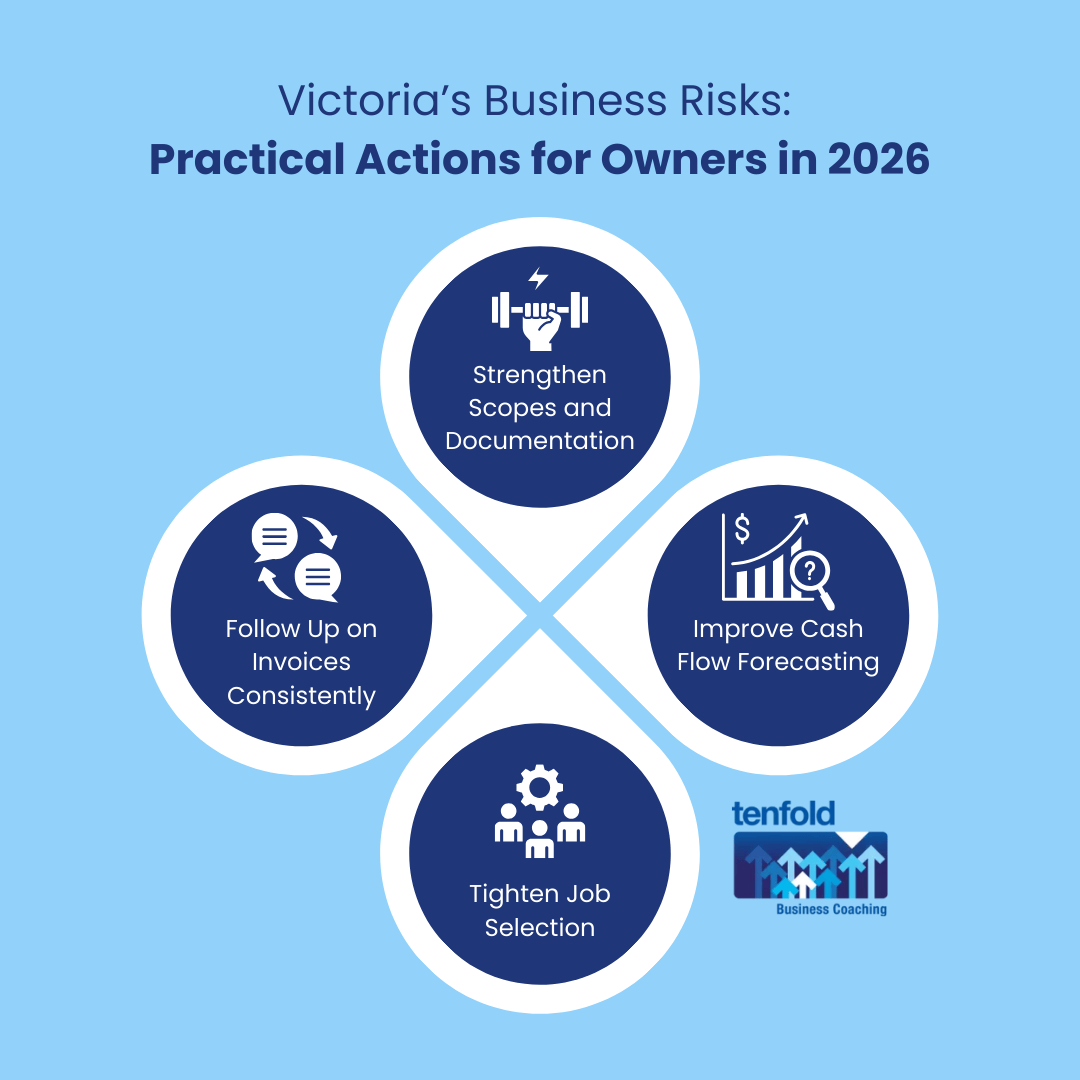
Practical Actions for Owners in 2026
To stay protected and confident in a higher-risk environment, owners should focus on:
Strengthen Scopes and Documentation
Clear scopes reduce disputes, speed up approvals and give clients confidence. When expectations are documented upfront, payment delays drop significantly. This is one of the simplest and most effective ways to reduce risk.
Improve Cash Flow Forecasting
Weekly forecasting provides owners with visibility into upcoming gaps and enables proactive decision-making. Businesses that forecast well rarely experience cash flow surprises, even in a volatile environment.
Tighten Job Selection
Choosing the right clients and projects is one of the most powerful risk‑management tools. Businesses that prioritise reliable clients and profitable work experience fewer disputes, fewer delays, and stronger cash flow.
Follow Up on Invoices Consistently
Professional, timely follow-up is essential in 2026. Clients respond better when communication is clear, consistent and structured. Businesses that treat invoicing as a disciplined process (not an afterthought) get paid faster.
These actions significantly reduce exposure to payment delays and financial stress.
Tenfold Insights: What We’re Seeing Across Victoria
Across the businesses we coach, the strongest performers are those who have embraced structure. They document everything accurately, price items accurately, and maintain clear communication with clients and suppliers. They also review their financials regularly, which gives them the confidence to make decisions even when the broader environment feels uncertain.
We’re also seeing that businesses with strong systems are attracting better clients. In higher-risk environments, clients want reliability and gravitate toward operators who demonstrate professionalism and consistency.
Strength and Stability Come From Systems, Not Luck
Victoria’s business risk environment in 2026 is challenging, but it is not something to fear. Insolvencies and payment delays are real, but they largely affect businesses with weak systems, unclear scopes, or inconsistent financial management. Strong operators (those who plan, document and forecast) are not only protected, they’re positioned to grow.
As a business coach working with Victorian trades, builders and manufacturers for over 20 years, I’ve seen how the right systems create stability even in uncertain times. If you want support building a more resilient, confident and financially secure business, learn more about how Tenfold’s business coaches work one-on-one with owners through our business coaching services.

